

Leer en español This is the first installment in a series about Pennsylvanians in recovery from substance use disorder and how stigma affected their recovery. The series is a collaboration between Public Good News, Centro Integral de la Mujer Madre Tierra, and Life Unites Us. If you’d like to share your story, contact us at Info@PublicGoodNews.com.
[Editor’s note: The contents of this interview have been edited for length and clarity. This interview was originally conducted in Spanish.]
José Lugo, 61
Outreach coordinator and recovery coach at Recovery Coaching Services
Reading, Pennsylvania
I started using drugs when I was in Puerto Rico, as a young man. For me, drugs were like a “passage to manhood.” I was about 16 or 17 years old. I started with marijuana, then cocaine, and later heroin. When I started using heroin, that’s when the consequences began. The conflict started—arguments with my family.
When I was 18, my mom told me to come to the United States because I’d be better off here. My dad sent me with my brother from Ponce, Puerto Rico, where I’m from, to Camden, New Jersey, so I could get better. But as the saying goes, I went “from bad to worse.” My dad was a police officer, my mom worked, so I came from a family with good values. But I started hanging out with people from the neighborhood and wanted to prove I was a man.
My ex-wife was living with me, and from there I went to Philadelphia. I got arrested there, got out and tried going to rehab programs, but I didn’t like them. First of all, they didn’t speak my language, so it wasn’t the same.
Stigma kept me from accepting help from a lot of people. Stigma is the nicknames people give you: “Look, he’s a junkie,” “he’s an addict,” “he’s crazy,” “he’s a criminal,” “he’s a thief.” You hear those names so many times that your self-esteem starts to believe them—“Well, I guess I must be a thief. I must be a junkie.”
All those labels—that’s stigma. It lowers people’s self-esteem. What person feels proud to be called a “junkie”? I felt ashamed, and that same mindset, those same words, kept me stuck in addiction. Because even when I went to jail, even when I went to groups, they said the same things.
I was able to analyze who I am and the person I become when I use—they are two different people, and that helped my self-esteem a lot. So who am I? I’m a father, a son, I’m honest, I have integrity.
But who do I become? Who am I and who is the person I turn into when I use drugs? Because no one ever told me, “José, I love the person you become when you use.” All my loved ones, my whole family, would say, “José, what are you doing? You have so many opportunities in your life.” Everyone believed in that—except me.
But when I started thinking, “Wait a minute, I don’t need drugs. I’m calmer, funnier, I look better, younger when I’m not using.” When I realized that, I said, “Wait”—that’s when I started being more authentic, more honest with myself, and building good relationships with other people.
It’s very hard to carry all those labels and still feel good about yourself. When I started to heal those labels and take them off—I took them off. I no longer identify as an addict. Words are like a double-edged sword. They can help you, but they can also cut you. The biggest battle I had wasn’t with other people—it was in my mind.
You start believing what people tell you: “José, they’re not going to give you a job. Man, you’re going in and out of prison—who do you think you are?” So I started challenging those false beliefs.
Do you know what I did? I said, “I’m going to work at the hospital… What can they tell me? No.” The first job they gave me—do you know where it was? At the hospital. And then I was in college. When I started changing the conversation, changing those labels, that’s when I started living my life.
In 1999, I came to Reading to a halfway house, and I met my now wife. I had not been using for a little while, then I resumed substance use… and now I’ve been sober for 11 years.
Ten years ago, I was scared because I was already 50 years old and had nothing. I got scared and said, “Wow, I haven’t paid into Social Security, I don’t have a house, I don’t have a car, I don’t even have a license.”
So I went back to college and got my bachelor’s degree. I got my life on track and started helping others. I began working at Recovery Coaching Services, providing peer support. I worked there and eventually became president and CEO of the company. Last year I said, “That’s enough”—and now I’m doing community outreach and talking to young people.
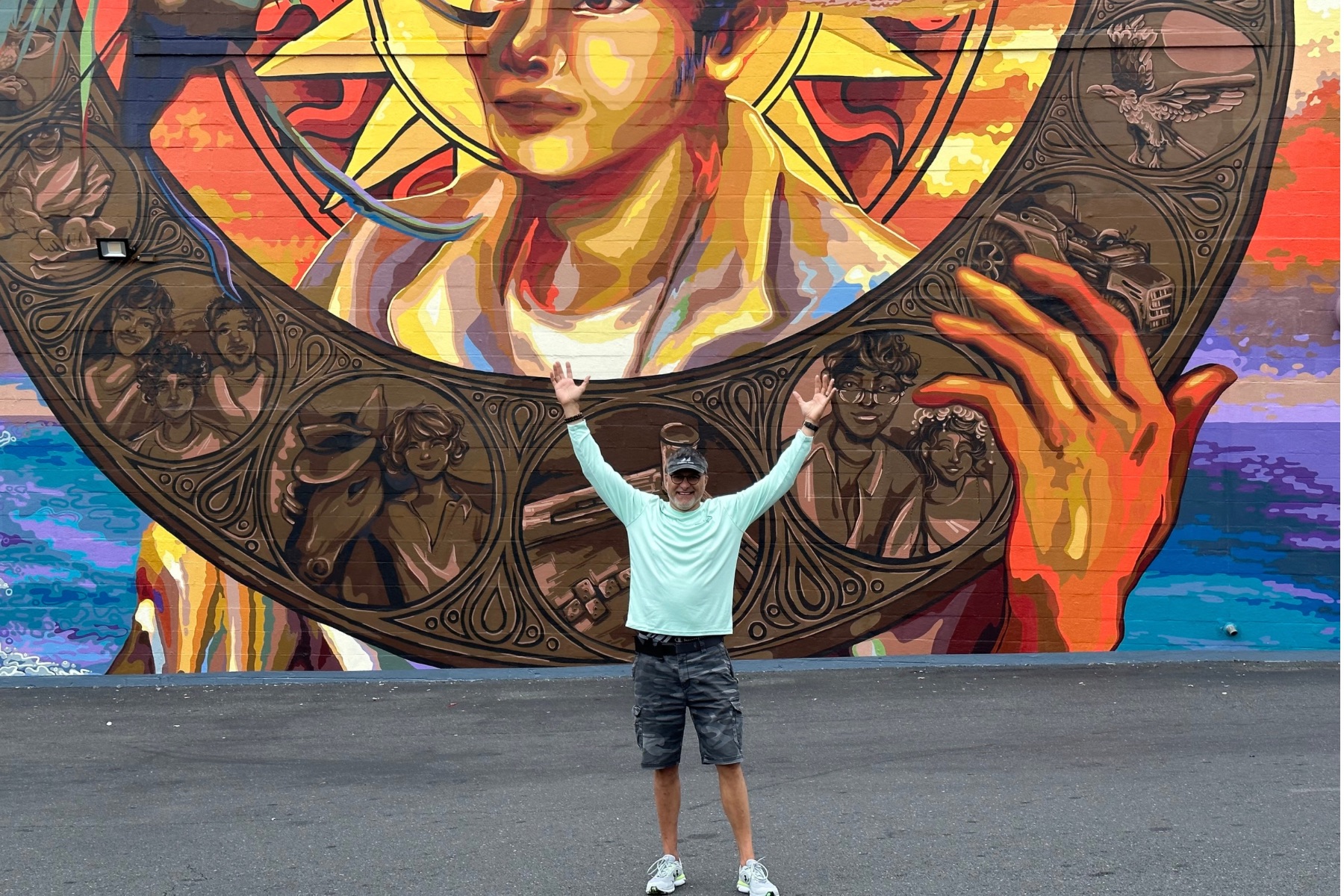
Two years ago, they made a mural in my honor—the whole community that supported me. Because when someone recovers, they don’t recover alone. Many people helped me, and I had to accept that help.
For the mural, they asked me, “What helped you in your recovery?” And I said, “My family.” Despite everything, my family never abandoned me. They always saw something in me that I didn’t see in myself—and that happens to all of us.
When I was growing up in Puerto Rico, before I started using drugs, it was a beautiful community. My family was the whole neighborhood. Those memories—my dad carving the turkey, me with my mare—I had a little horse and even put a cap on it. The simplicity and humility of my Puerto Rico is something I never lost, and it helped me in my recovery.
Now I’m truly living a good life, and what I love most is that I’m contributing to my community.
I’m with my family. I’m present at work serving others. I love to cook—last night I made some white rice, salmon, shrimp, and avocado. I have my car, my house, my job, my family, my health—all the things I value.
I didn’t start using drugs with the intention of becoming addicted or losing everything.
But it turned into an addiction that hijacks your brain. I thank God that I can’t change what happened, but I can change what happens from now on. I don’t identify with that person, because that person isn’t me. I thank God that I don’t live that way anymore.
Like everything in life, you have to maintain it—and the way I maintain it is by serving others.
If you’re looking for substance use disorder or mental health help in Pennsylvania, find a list of resources here.
This article first appeared on Public Good News and is republished here under a Creative Commons Attribution-NoDerivatives 4.0 International License.