


This story was produced by the Berks County bureau of Spotlight PA, an independent, nonpartisan newsroom. Sign up for Good Day, Berks, a daily dose of essential local stories at spotlightpa.org/newsletters/gooddayberks.
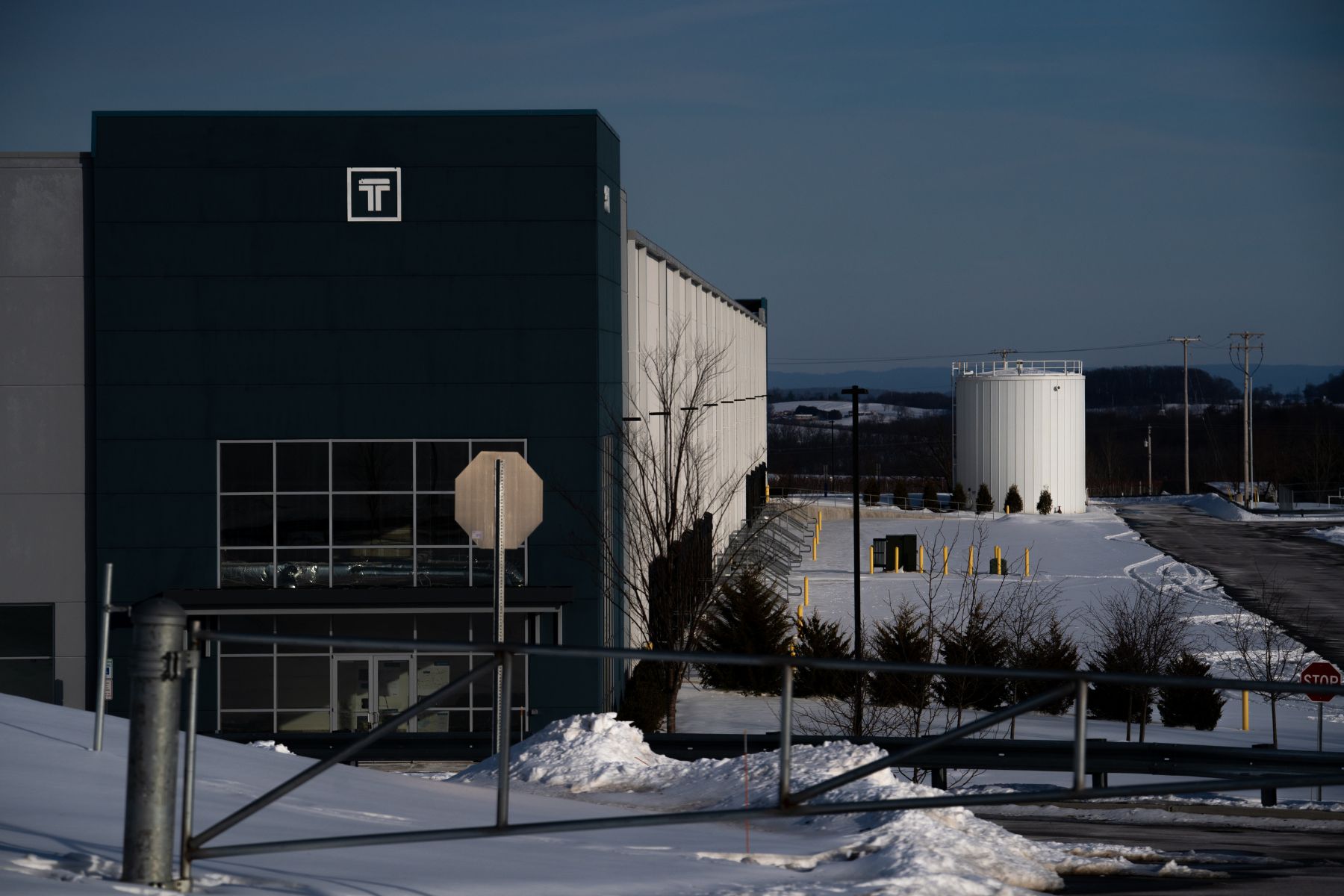
UPPER BERN — The developer of a Berks County warehouse that ICE wants to use as a processing facility hasn’t fixed construction deficiencies at the property despite years of requests from local officials.
Now it’s unclear if it ever will.
In late January, the Department of Homeland Security purchased the warehouse at 3501 Mountain Road in Upper Bern. Shortly after, the township gave Transwestern Development Company its ninth extension to address outstanding problems associated with the project’s land development agreement.
This type of agreement protects a municipality and its residents from being stuck with unfinished or faulty infrastructure if a project goes bankrupt or the developer disappears.
In a Jan. 30 letter, the township told the Texas-based developer it still needs to complete road stabilization and stormwater-related work. Records obtained by Spotlight PA show issues, including a lack of communication and making changes to the plan as agreed to, began shortly after the developer signed the agreement in 2020.
“It should be noted that upon termination of [a state permit necessary for construction], all maintenance requirements will become the responsibility of the township,” Upper Bern sewer engineer John Roche said in the letter. “We therefore are required to ensure that the plans have been followed by the developers to avoid unexpected costs for the township related to any deficiencies.”
Transwestern, through GACSD Industrial Development LLC, requested an extension shortly after the $87.4 million sale was recorded with the Berks County Recorder of Deeds. The township’s supervisors unanimously agreed to give the developer until March 13.
A Harrisburg attorney representing GACSD did not respond to emailed questions asking whether the developer will address the issues by the latest deadline.
If it doesn’t, it’s unclear what the township can or will do.
Supervisors directed all questions to Solicitor Andrew Hoffman, who declined to comment. He previously told Spotlight PA that officials were unsure how many outstanding items could be addressed by the developer now that the property has been sold to the Trump administration.
It’s also unclear whether the federal government would have to abide by the land development agreement.
Further complicating the future of the warehouse are recent actions by the Shapiro administration. On March 5, the Department of Environmental Protection (DEP) issued five administrative orders that prevent DHS from occupying the Berks County warehouse. It also issued an order that prevents DHS from using a Schuylkill County facility intended to become a mega-detention center.
DEP oversees permits for stormwater, wastewater, and drinking water systems, and the orders say water and sewage can’t be supplied to the buildings until environmental laws and regulations are followed.
In a news release, DEP Secretary Jessica Shirley said the proposed ICE facilities would effectively add 9,000 people to the small, rural communities’ already stressed systems.
“Doubling the populations of these areas could drain drinking water sources and lead to polluted waterways from overwhelmed sewage facilities leaking raw waste into our streets and rivers,” Shirley said. “Just like anyone else, DHS needs to demonstrate its facilities comply with environmental standards.”
Early problems
In Upper Bern, elected officials and professionals involved with the warehouse’s approval and construction refused to answer questions from Spotlight PA.
However, records obtained through a Right-to-Know request show the relationship between the developer and the township broke down shortly after the agreement was signed in September 2020.
After contractors moved a buried water storage tank from the original plans in 2021, Upper Bern’s engineer asked for confirmation the switch would “not cause any stormwater-related issues.” It’s unclear whether that information was provided. No township officials, including Roche and Hoffman, answered whether this was addressed.
In June 2021, the Shartlesville Fire Company warned in writing that construction plans didn’t include certain fire safety measures, like an internal stairway with floor-to-roof access, and that hydrants were not installed with proper hose connections for the local department. And unlike construction of a prior warehouse, this developer didn’t ask what hydrant connections were preferred, the fire company said.
The developers later addressed the hydrant issue and argued in emails that improvements like the internal staircase could be handled later.
Emails show the developer and its contractor, Blue Rock Construction, changed the approved plans without letting local officials know. This included moving stormwater pipes and altering site grading, which affects runoff and erosion.
Roche, the sewer engineer, wrote in a June 2022 report to Upper Bern officials that Blue Rock had apparently undergone staff changes: “In those transitions, we have been left out of the loop with site construction reporting.”
Months later, after a site inspection found outstanding problems, including improper grading along Mountain Road and on the property, Upper Bern’s solicitor told the developer it was in default of the land development agreement, prompting Blue Rock officials to respond.
Blue Rock claimed that neither they nor the owner were notified about an inspection performed in August that resulted in the default notice, denied the township’s claims, and promised to provide the requested as-built documents.
Over the next two years, the township approved more time extensions and amendments to the development agreement to address problems and continued stormwater and sewer deficiencies.
Issues persisted after the warehouse was purchased in September 2024 by national real estate equity firm PCCP LLC, which hired another company, JLL, to manage the property. The warehouse’s water storage tank overflowed, resulting in “brown well water” for neighbors, Roche wrote in an email. It’s unclear whether the township received any documentation about the incident when asked on Nov. 23, 2024.
Roche, Upper Bern’s sewer engineer, did not respond to calls and emails from Spotlight PA seeking clarity on the issues he faced with 3501 Mountain Road’s construction.
Upper Bern Supervisor Arthur Lambert could not be reached. Gloria Grim, chair of the township’s supervisor board, hung up on a Spotlight PA reporter. Additionally, Lisabeth Lynn, a supervisor elected in 2025, declined to comment and directed a Spotlight PA reporter to Hoffman, the solicitor. He also declined to answer questions.
Unresolved items
Federal law requires big construction projects like the warehouse in Upper Bern to obtain a permit that covers stormwater runoff during the building process. DEP granted that permit, and the township is asking the developer to correct the deficiencies so the project can be completed.
Developers also need to finalize plans by ensuring the property is dedicated and documented, and plans are signed and sealed by professionals. This is the final step to closing out the land development agreement.
In a January letter, the township detailed the work it says the developer still needs to do. Most prominent are ensuring slopes along Mountain Road were installed according to the approved plan, and maintaining the stormwater systems on site, which include basins and swales.
Whether the township is concerned about flooding or other problems related to the warehouse’s stormwater system is unclear, as officials declined to comment.
Timothy Davis of Schock Group — a civil engineering and land surveying firm not involved in the warehouse project — reviewed the development agreement and said most of the remaining needs are “run-of-the-mill development items.” The unapproved stormwater modifications could be a “relatively minor speedbump” for developers, he added.
“But often communities will grant use of a facility even while these things are being worked out,” Davis told Spotlight PA.
Upper Bern, in the letter, suggested crafting a maintenance agreement for the property’s stormwater systems to include addressing dead trees and bushes.
As part of the stormwater system permitting process, a developer can use plants and trees, which can shrink the size of any structural stormwater facilities, Davis said. For example, a stormwater basin can be smaller if more trees are planted to absorb water runoff. If the developer decided not to plant those trees per the approved DEP permit, Davis said that could make the developer noncompliant.
DEP did not answer questions from Spotlight PA about the warehouse’s stormwater management system’s construction and proper maintenance.
Transwestern was given until March 13 to address these items. The Upper Bern Board of Supervisors is scheduled to meet March 12.
The land development agreement sets aside money that Upper Bern can tap into should the work not be completed. And should the warehouse building’s use change, the new owners would have to propose a new development plan.
Upper Bern’s land development agreement with Transwestern included about $6 million in performance bonds to protect the municipality financially. Money set aside within a development agreement can be accessed by municipal leaders to make the improvements should the developer fail to do so, said Zachary Sivertsen, a partner at Eastburn & Gray law firm.
“The township can go and draw that money from the bank and use it to hire people to go in and do that work,” Sivertsen said. “That’s the gist of what a development agreement is for.”
A new owner can also propose redevelopment plans, Sivertsen said. It wouldn’t make sense to require trees to be planted on the property if those plans are going to be scrapped for something new, he said.
Sivertsen would not speculate on how that scenario would play out under federal ownership, but said new owners who want to pitch a different use would have to go through the land development process and prove that the proposal meets laws and municipal ordinances.
BEFORE YOU GO… If you learned something from this article, pay it forward and contribute to Spotlight PA at spotlightpa.org/donate. Spotlight PA is funded by foundations and readers like you who are committed to accountability journalism that gets results.
