


This story was produced by the Berks County bureau of Spotlight PA, an independent, nonpartisan newsroom. Sign up for Good Day, Berks, a daily dose of essential local stories at spotlightpa.org/newsletters/gooddayberks.
An ICE memo gives a glimpse into the agency’s intent for warehouses it quietly purchased in Pennsylvania and across the country as part of a sweeping, $38.3 billion plan to expand detention capacity.
The memo on the “detention reengineering initiative” was sent to New Hampshire Gov. Kelly Ayotte and released publicly by her office. A spokesperson for Pennsylvania Gov. Josh Shapiro said his administration has not received such a memo, and ICE did not respond to questions about a Pennsylvania-specific assessment.
A spokesperson for U.S. Rep. Dan Meuser (R., Pa.), whose district includes the sites where two centers are planned, did not respond to specific questions from Spotlight PA about whether he had seen a similar ICE assessment for Pennsylvania.
“I share many of the same questions being raised by local officials and residents. I have been in regular communication with DHS officials and spoken with elected leaders in both Schuylkill and Berks Counties, and we will continue those discussions as we work to get clear answers,” Meuser said in an email. “We will continue to monitor these facilities and provide oversight to ensure they operate responsibly and in a manner that is not overly intrusive to our community.”
Still, the first three pages of the memo give a broad overview of the larger plan, including the agency’s timeline and the due diligence it claims it has done for each facility to ensure they do not overwhelm local resources.
Several of ICE’s claims stand in stark contrast to what local and Shapiro administration officials have said about the potential impact of the Berks and Schuylkill County detention centers on water, sewer capacity, and more.
Many Pennsylvania residents are anxious to know exactly what ICE plans to do with the warehouses. In recent county and township meetings, they have urged local officials to stop the development.
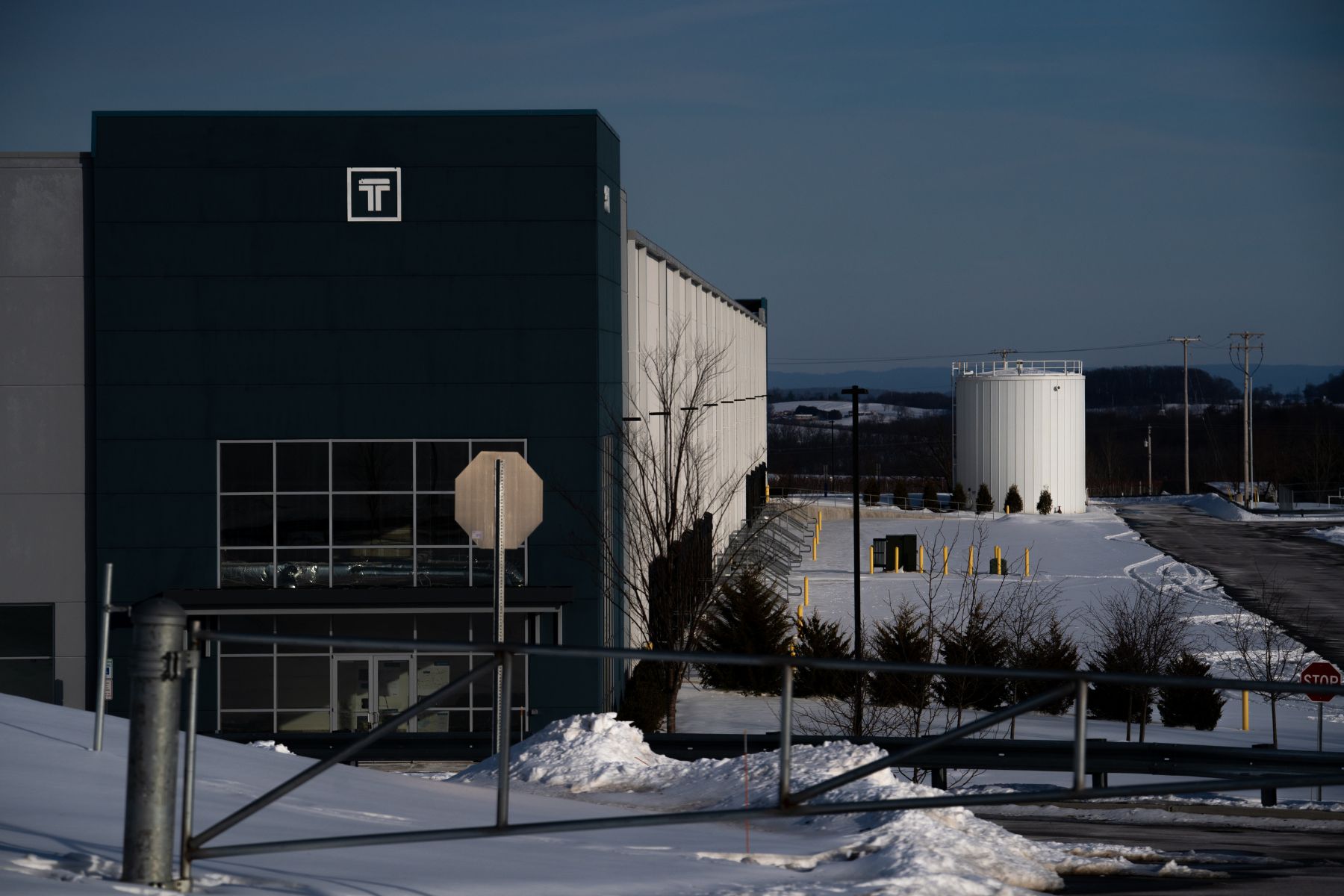
The Berks County Board of Commissioners said in a town hall meeting on Feb. 11 that the nearly 520,000-square-foot warehouse in Upper Bern Township will be a processing center for about 1,500 individuals.
Meanwhile, Schuylkill County Commissioners found out from Meuser that the former Big Lots distribution center in Tremont Township is slated to be a mega detention center intended to house up to 7,500 people.
In the memo, ICE says its new detention model includes acquiring and renovating eight large-scale detention centers, as well as 16 processing centers. The agency aims to open them by Nov. 30.
ICE maintains it will follow the National Environmental Policy Act (NEPA), which requires federal agencies to evaluate the environmental impacts of proposed projects.
For each proposed facility, ICE says it conducted engineering reviews, which look at capacity for electricity, water usage, and waste exportation.
“Once these capacities were identified, an engineered solution was developed, using standard code compliant methodologies within the design of the facility,” according to the ICE memo. The final choice was based on a finding that it would have no “detrimental effect.”
While the large-scale facilities may need some upgrades to water and sewage capacities, the processing facilities do not, the memo says.
These assurances by ICE contradict what Upper Bern, Berks County officials, and the Shapiro administration have said regarding the township’s capacity to support a 1,500-person processing facility.
In a letter to Homeland Security Secretary Kristi Noem, Shapiro and state agency officials said the proposed facilities would overburden water and sewer resources in both Tremont and Upper Bern Townships.
“If reporting about DHS’s plans is accurate, the facilities will violate legal requirements applicable to public drinking water, sewage, and water pollution. State authorities will not issue required permits that would violate these legal requirements,” the officials wrote in the letter.
A new kind of detention facility?
ICE estimates the new plan for processing and detention facilities will cost about $38.3 billion and will be paid for with funds Congress allocated through the “One Big Beautiful Bill Act.”
Aaron Reichlin-Melnick, a senior fellow at the American Immigration Council, said the new money pouring in from Congress allows the Department of Homeland Security to move away from the current model in which jails and facilities run by private prison companies house detainees.
This “reengineering” of immigrant detention, he told Spotlight PA, will “essentially rebuild the system from scratch, moving away from that patchwork of facilities … to a system where the federal government takes control of these warehouses and builds them to common specifications and creates this new more efficient network of detention and deportation.”
The ICE memo also sheds light on the difference between planned detention and processing facilities. The document describes regional processing centers that are intended to house an “average daily population of 1,000 to 1,500 detainees for average stays of 3-7 days.”
Large-scale detention facilities, according to the memo, would house 7,000 to 10,000 detainees for up to 60 days, and would be main centers where people would stay before being deported.
Keith Armstrong, immigrants’ rights attorney at the ACLU of Pennsylvania, said it is hard to say how the facilities will actually operate once up and running. He said it’s also unclear whether the warehouse-based processing centers described in the memo represent a new model or would operate differently from existing ICE facilities in Pennsylvania.
For example, at Moshannon Valley Processing Center in Clearfield County, the average stay for detainees was 78 days, according to a 2024 study by Temple University’s Beasley School of Law — far longer than the three-to seven-day timeframe described for the proposed regional processing centers.
The model described in the memo, Armstrong said, signifies a “dramatic shift and scaling up of the deportation machine.” The timelines indicate that people would be detained for shorter periods of time.
“They also show that ICE is trying to speed up the removal process as much as possible,” Armstrong said. “If some people are supposed to have due process rights and immigration proceedings — there is a faster track of court hearings for people who are in detained removal proceedings — but completing the entire process in a maximum of 67 days, as this document would indicate, would be very, very fast.”
In the memo, ICE promises to comply with its latest National Detention Standards, which apply to non-dedicated facilities that hold local inmates, and people in criminal and pretrial detention, in addition to its detainees. Dedicated facilities that only hold ICE detainees, like Moshannon Valley Processing Center, use Performance Based National Detention Standards.
Armstrong sees the use of National Detention Standards as unclear at best, given that the sites ICE is proposing are intended specifically for immigrant detainees.
Both standards were created to ensure a baseline of safety and health for detainees, but federal inspections show ICE sometimes does not meet them. Moshannon Valley Processing Center has come under scrutiny after two reported deaths there in 2025.
In 2024, the ACLU filed a federal complaint against the Department of Homeland Security alleging detainees at Moshannon endure inhumane conditions and lack access to basic medical services.
BEFORE YOU GO… If you learned something from this article, pay it forward and contribute to Spotlight PA at spotlightpa.org/donate. Spotlight PA is funded by foundations and readers like you who are committed to accountability journalism that gets results.
