


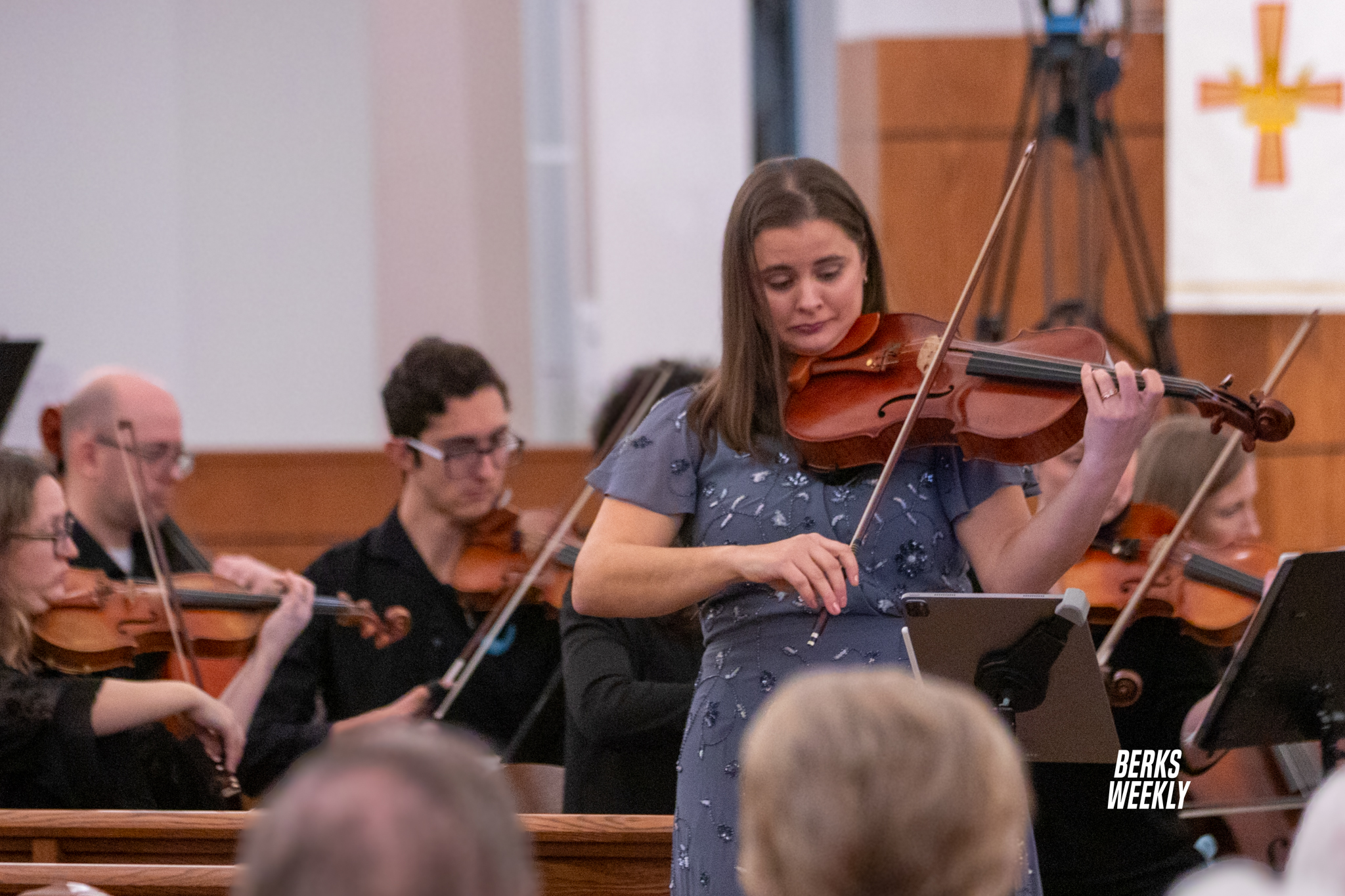
The Berks Sinfonietta opened its 2026 season over the weekend with a program that paired familiar Classical-era concertos with 20th-century works that remain far less frequently heard, offering audiences both grounding and discovery in a single afternoon.
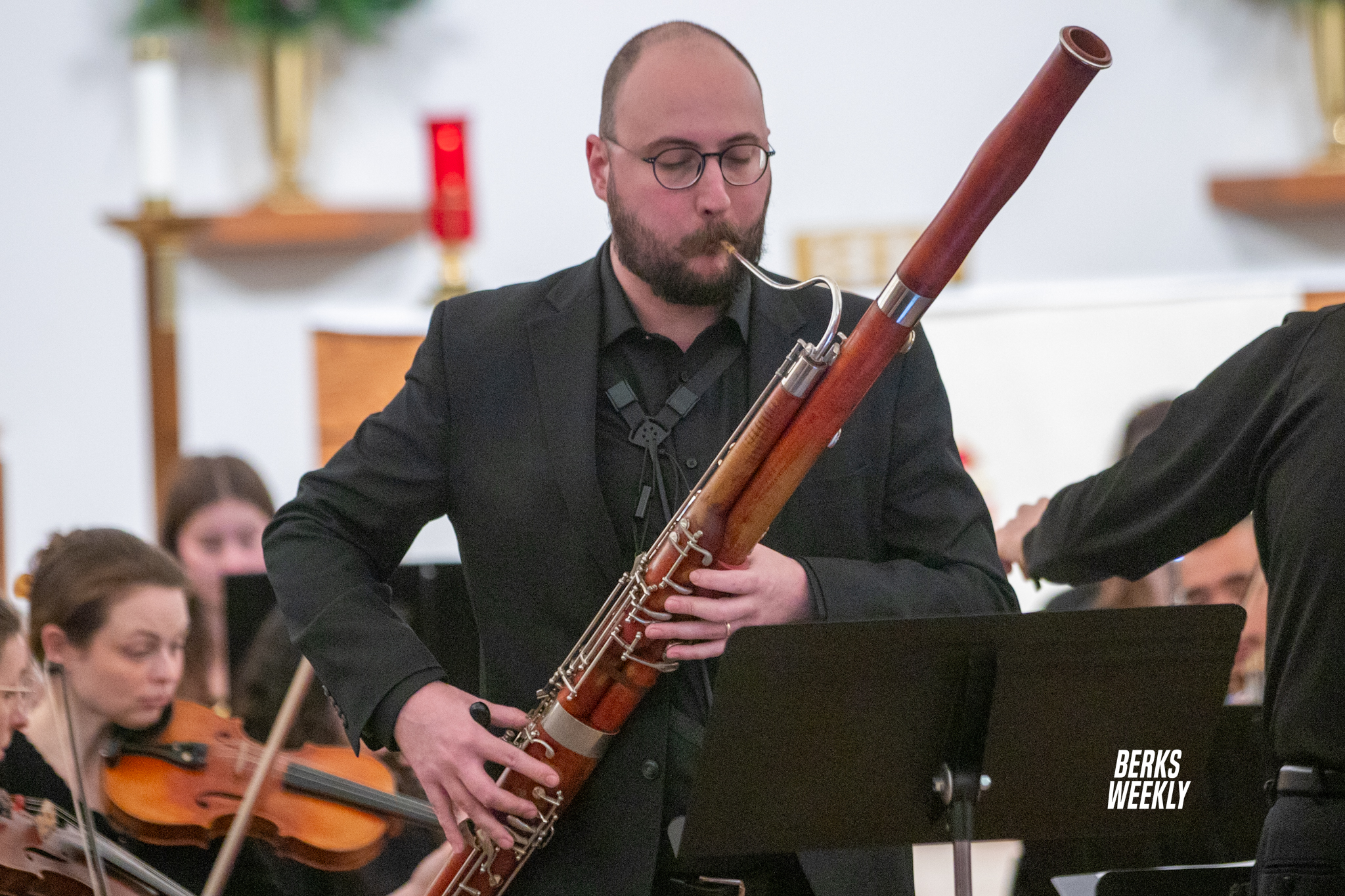
Presented at Atonement Lutheran Church in Wyomissing, the concert featured two Mozart concertos in the first half before turning, after intermission, to Ruth Gipps’ Jane Grey, Fantasy for Viola and String Orchestra and David Diamond’s Rounds for String Orchestra. Guest conductor Tyler Readinger led the ensemble for the final work, with solo performances throughout the program by bassoonist Joshua Schairer, flutist Suzanne Francis, and violist Kathleen Stevens Bahena.
While the Mozart selections provided a bright and balanced opening, it was the Gipps work—anchored by Bahena—that formed the emotional and conceptual core of the program.
Gipps’ Jane Grey Fantasy is not new to Berks Sinfonietta’s broader mission. According to Bahena, the ensemble has been gradually exploring Gipps’ catalog for several years, beginning around 2021. When she was invited to perform the Jane Grey work, it became part of a deeper personal and academic engagement with the composer.
“Learning the Jane Grey Fantasy has become part of my exploration and pursuit of Gipps’ music,” Bahena said, noting that she sought out other viola works by Gipps and performed them in multiple academic and professional settings to help bring attention to the composer’s output. She described Ruth Gipps as “a severely underperformed composer,” adding that she was grateful to work with an organization willing to support that exploration.
That advocacy was evident in the performance itself. Unlike a traditional concerto, Gipps’ piece avoids virtuosity for its own sake. Instead, the viola functions as a narrative voice—an approach Bahena emphasized both musically and conceptually.
Composed as a musical portrait of Lady Jane Grey—the English queen who reigned for just nine days before being executed at age 16—the Jane Grey Fantasy unfolds as a series of interwoven themes rather than a soloist-versus-orchestra display.
“This piece is not a typical concerto,” Bahena said. “The viola part is not showy or predominantly virtuosic. Instead, Gipps uses the viola to be a voice for the tragic Jane Grey. In essence, the viola is Jane Grey.”

Throughout the piece, the solo viola weaves in and out of the orchestra rather than standing apart from it, especially at the beginning, where musical ideas are shared instead of clearly separated. As the work moves forward, those ideas return in shorter, more intense bursts during the final section, often described as Jane Grey’s death scene, building to a single high note before the music suddenly falls silent.
Bahena described that concluding passage as both technically and emotionally demanding. “Pacing this section and making sure to communicate with the lower strings and David… if it all works out, it will be very powerful,” she said.
In performance, the restraint of the earlier sections made the ending’s intensity all the more striking, with the orchestra responding closely to the solo line rather than overpowering it. The result was a quiet but unsettling conclusion that lingered well beyond the final silence.
Bahena said her preparation process begins long before rehearsals, often starting with learning the music by ear and studying how the solo line interacts with the orchestra. For a work that has been performed relatively few times, that preparation required additional score study and historical research.
“One of my favorite parts is researching the piece and the composer,” she said. “It helps my understanding of what the composer was trying to say with the music, and that shapes my interpretation.”
She also pointed to a perceived kinship between Gipps and her subject, noting that both women were shaped—and constrained—by the social structures of their times. Gipps, she said, did not find sustained professional success until late in life, despite early promise, a reality that resonates with the tragic brevity of Jane Grey’s story.
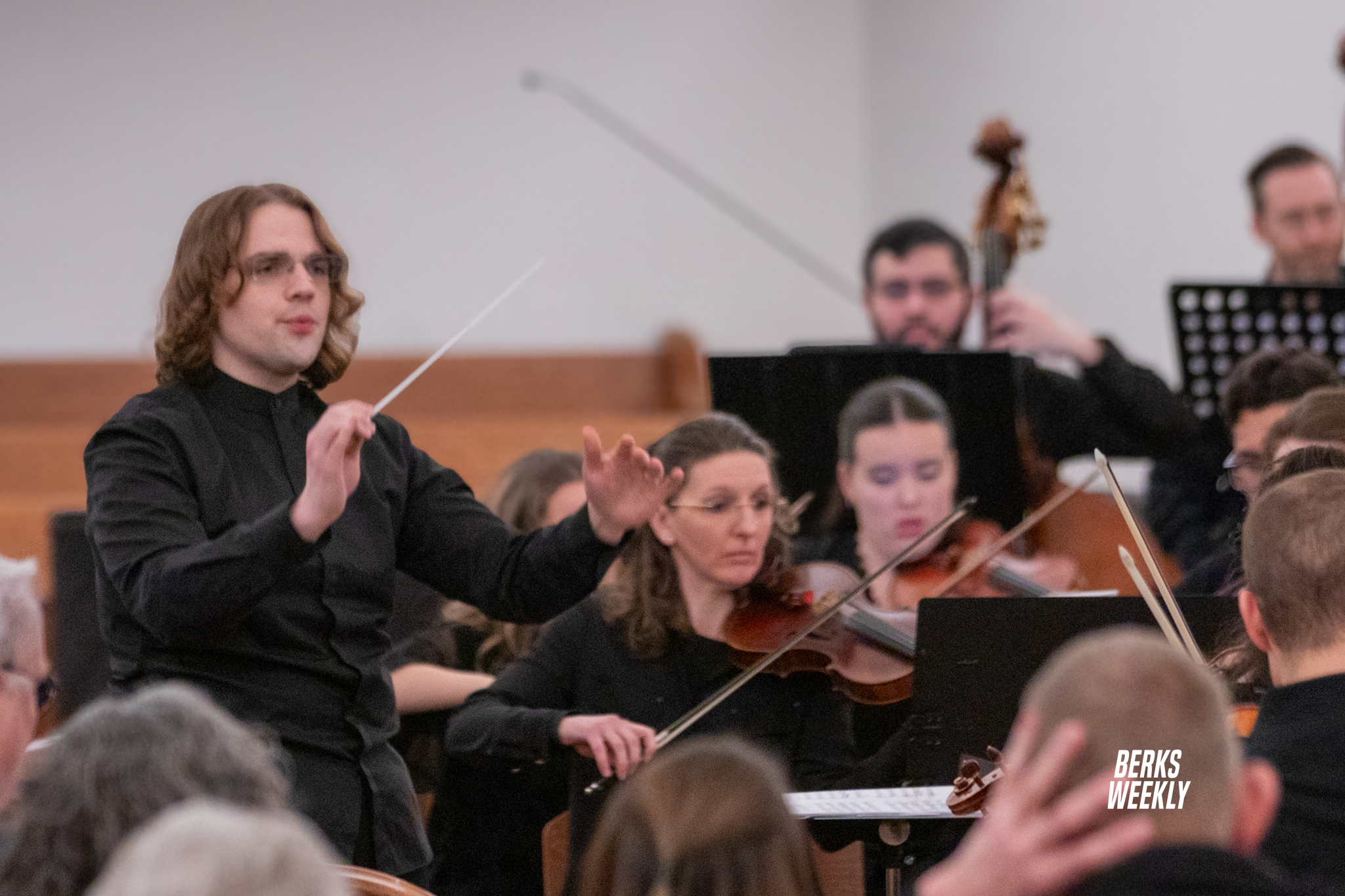
The surrounding works on the program offered contrast rather than competition. Mozart’s Bassoon Concerto in B-flat major and Flute Concerto No. 1 in G major emphasized lyricism and clarity, allowing soloists Schairer and Francis to engage in refined dialogue with the orchestra. Diamond’s Rounds for String Orchestra, composed during World War II, closed the concert with rhythmic momentum and tightly constructed textures that highlighted the ensemble’s cohesion.
Taken together, the program reflected Berks Sinfonietta’s dual commitment to accessible repertoire and the intentional elevation of overlooked voices. In placing Gipps’ Jane Grey Fantasy at the heart of the concert, the ensemble reinforced that mission not as a thematic gesture, but as a living, interpretive practice—one grounded in research, advocacy, and performance.
