


This year, elementary and early childhood education celebrates 20 years as a bachelor’s degree program at Penn State Berks. During the last two decades, the college has graduated hundreds of students who have gone on to become teachers, principals, reading specialists, school psychologists, speech-language pathologists, and other education professionals.
Jessica Schocker, program chair for elementary and early childhood education and associate professor of social sciences education and women’s studies, stated, “The only constant is change, and the field of education is no exception. Over the past two decades, we have adapted to online learning during a global pandemic, navigated increasingly contentious political times, confronted a severe teacher shortage, and grappled with the ways artificial intelligence is transforming teaching and learning.”
“As we reflect on the past twenty years, however, we are reminded of what has remained constant: the passion, dedication, and sense of purpose that bring our students to the teaching profession.”
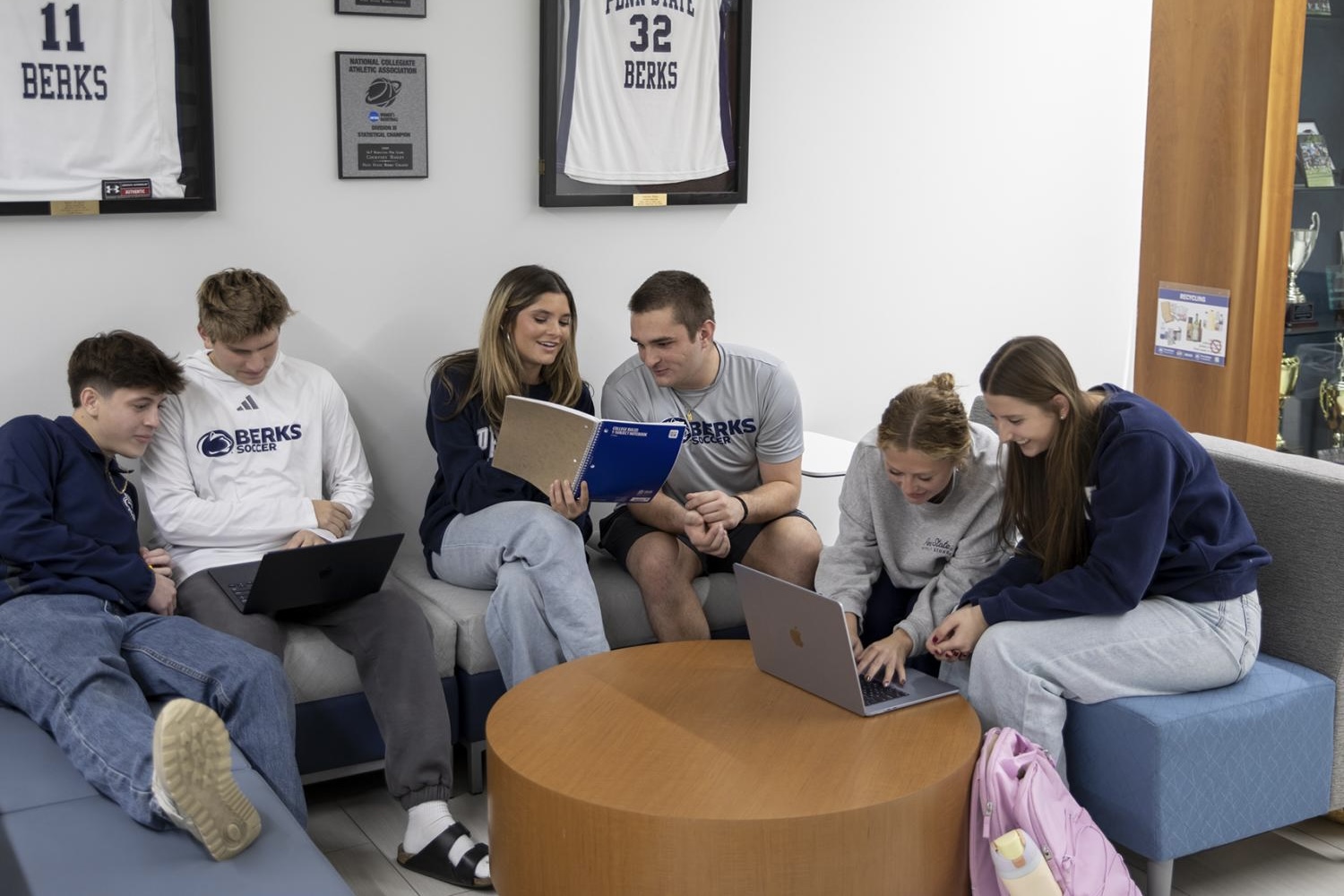
To explore what that commitment looks like today, Schocker spoke with a group of elementary education majors who are also Penn State Berks student-athletes, balancing demands in the classroom and on the field of competition.
What is it like to be an elementary education student at Penn State Berks?
At Penn State Berks, elementary education majors face rigorous academic expectations, including the highest GPA requirement and the most extensive entrance-to-major requirements on campus. For the college’s NCAA Division III student-athletes, these demands come alongside practices, games, and other team commitments.
Over the past couple of years, education faculty at Penn State Berks have noticed an increase in the number of student-athletes enrolled in the education major. Their shared experiences have helped foster a sense of community that extends beyond their team sport and into their education classes.
Sophomore Emily Erb, a member of the women’s soccer team, understands those competing demands. “I don’t think people realize how hard it is,” Emily said. “People think it’s easy to be a teacher but it’s not; you have to hold yourself to a high standard. Studying education builds your character.”
Her teammate, Ava Ortiz agreed, “You do it because it’s your passion. Being a teacher is like being an athlete; it requires commitment.”
This year, four first-year elementary education students joined the men’s soccer team. When asked about what it’s like to have each other for support both in the classroom and on the field, the teammates chuckled and exchanged a knowing look.
First-year student Thomas McMichael said, “In one of our classes, the whole front row is soccer players; we are all pretty close.” A junior on the men’s soccer team, Christian Salguero, added: “I feel connected to the other athletes in my classes; we have something special in common.”
When asked about their favorite aspects of the Berks education program, first-year student Landon Schadt said, “It’s hands-on. We actually go to the schools and get to practice teaching. It’s a very active major.”
Ortiz reflected that she really enjoys her early field experience class and getting to know the kindergarten students in her placement. “Every time I say goodbye to the kids, they always say, ‘Good luck at your game!’”
Throughout their first three years, Berks elementary education students participate in several field placements, followed by a year-long student-teaching internship during their senior year. These extensive classroom experiences help prepare graduates for their first teaching positions.
Students were asked why they want to become elementary school teachers, and most shared that they experienced teachers and coaches who had a tremendous impact on their lives.
“My teachers wanted me to succeed in life, not just in school. They were my biggest mentors; I want to be that person to the kids I teach,” said Schadt.
McMichael added that he appreciated how being an elementary education major is a lifestyle, just like being a teacher. “I remember my club soccer coach who was also a full-time teacher. He always showed up and gave us his best, even when we didn’t deserve it. His dedication inspired me.”
Ortiz added, “I started coaching little kids when I was 13. Seeing their success brought me so much joy; I knew I wanted to be a teacher.”
Erb spoke about how her fourth-grade teacher made her believe she “mattered,” and that looking back, that care means even more to her now than it did as a child.
Sophomore Ella Griffiths, a member of the women’s volleyball team, said she grew up in classrooms; both of her parents are teachers. “As I grew up, so did my passion for teaching and learning,” she said. “At Berks, the elementary education professors work very well around our games and take pride in their student-athletes; it’s special and makes me feel appreciated.”
The outlook for a career in teaching
Elementary education graduates are poised to do very well when they graduate, explained Schocker. The teacher shortage the United States is currently experiencing has resulted in a surplus of job opportunities for teachers.
The Pennsylvania Department of Education recently released its December 2025 Educator Workforce Report. “At the start of the 2024-25 school year, approximately half of local education agencies (LEA) reported more than 3,300 vacancies, with the highest numbers being in special education, school psychology, elementary all levels, school nurses and math.”
The Penn State Center for Evaluation and Education Policy Analysis research brief found that teacher shortages in Pennsylvania are so dire that there is a notable rise in the schools using emergency permits because they cannot find enough certified teachers. The brief also mentions that the teacher shortage is even more acute in districts with higher percentages of students living in poverty and students of color.
Penn State Berks serves the city of Reading and surrounding areas. According to the report cited above, the teacher shortage in Berks County is in the “high” category. Berks County had 163 teacher vacancies in the 2024-2025 school year and 149 teachers working under emergency permits; 292 additional qualified teachers were needed in Berks County alone.
“Nearly all Penn State Berks graduates in the last three years have secured contracted positions in public schools where they benefit from a highly sought-after pension program and excellent healthcare,” stated Schocker.
She goes on to state that as demand for teachers continues to rise, we expect to see continuing incentives for highly qualified students to enter the profession. Already, the Pennsylvania Higher Education Assistance Agency (PHEAA) has begun rolling out grants for preservice teachers pursuing degrees in education with the support of the state government. It is quite possible that such initiatives will continue and potentially expand as the teacher shortages persist.
“While artificial intelligence is reshaping many professions, teaching remains fundamentally grounded in human relationships. AI will undoubtedly influence classroom instruction, but the need for skilled educators who understand, support and connect with children remains central to the profession,” Schocker explained.
The power of a Penn State education degree
Penn State’s College of Education is widely regarded as a top-tier institution for a degree in education. Known for strong teacher education programs and research, Penn State is ranked by Niche as the number one best school of education in the state of Pennsylvania. Further, Penn State ranks among the top 50 best education schools nationally by U.S. News and World Report graduate school rankings.
The elementary and early childhood education degree offered at Penn State Berks is the same degree offered at University Park; Berks graduates’ degrees are conferred by the College of Education. Local students can earn a Penn State education degree close to home, while students from outside the Berks County area enjoy the same academic opportunities in a setting characterized by small classes, close-knit relationships and meaningful faculty involvement.
Schocker summarized, “As we celebrate 20 years of teacher education at Penn State Berks, we are also looking ahead. Penn State’s recent Academic Portfolio and Program Review (APPR) identified Elementary and Early Childhood Education as a program to be promoted, recognizing its potential for continued growth and its alignment with workforce needs. We look forward to building on this momentum.”
For more information on the Penn State Berks elementary and early childhood education degree, visit the website or contact Schocker at 610-396-6457 or via email at JBS213@psu.edu.
