


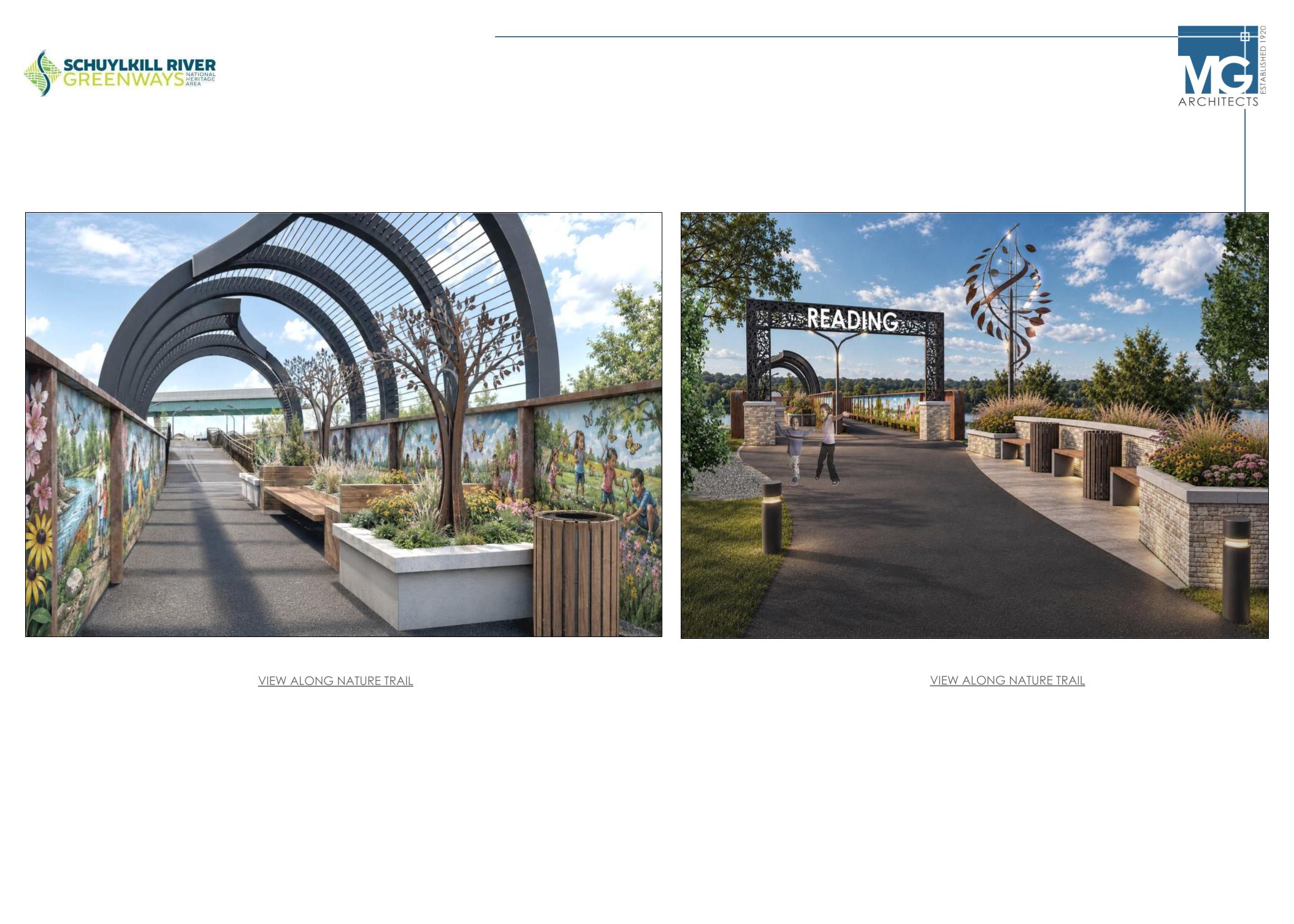
Murals, metalwork, solar powered lighting, and unobstructed views of the river are planned for the reimagined Reading Gateway Bridge.
Schuykill River Greenways is unveiling concept designs for the 600-foot pedestrian bridge, directly inspired by the wants and needs of hundreds of locals and frequent trail users from Berks and beyond.
Elaine Schaefer, executive director of Schuylkill River Greenways (SRG), expects the trestle bridge that connects Riverfront Park to the West Reading area will be one of the local crown jewels for outdoor enthusiasts across the region.
“The transformation of this bridge will create an extraordinary destination experience and will draw people to the Reading area from all over,” Schaefer said. “Further, the bridge is part of a long-distance trail – the Schuykill River Trail – which itself serves as a travel destination. Equally important, the bridge will serve as a point of pride for the greater Reading community and become one of the special places that make a destination unforgettable.”
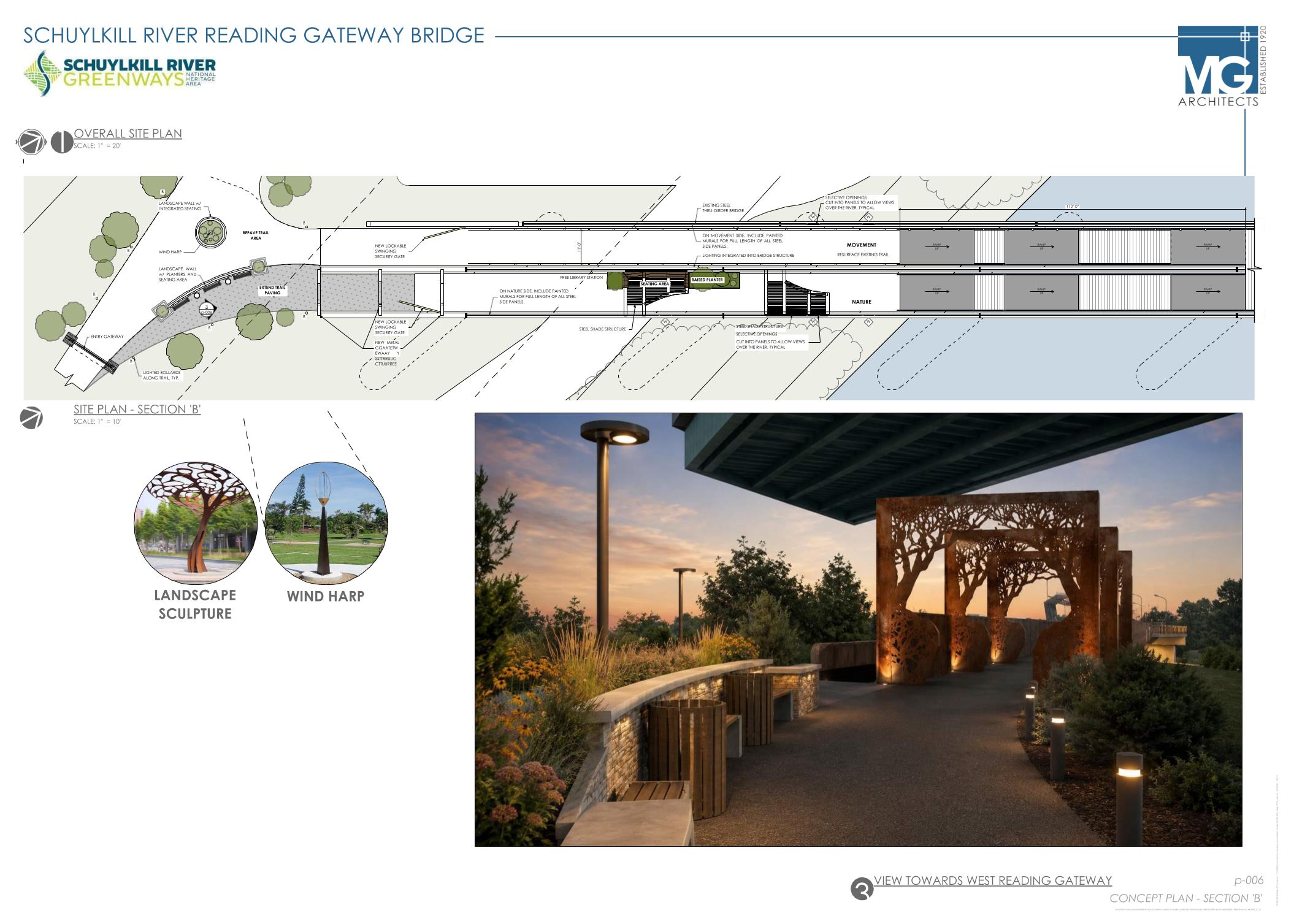
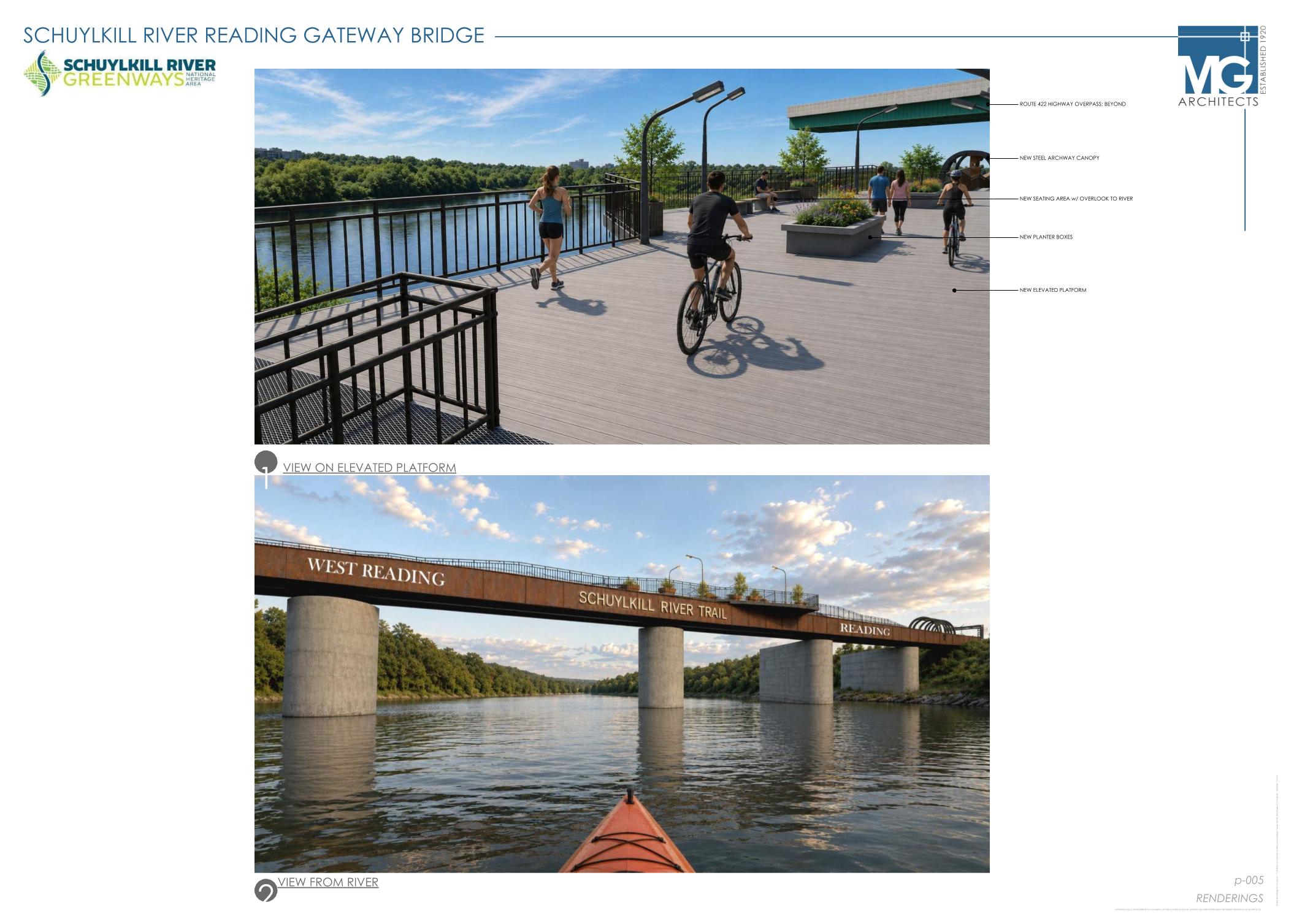
The designs plan to reopen the currently closed southern lane of the bridge to house plantboxes, benches and welcome slower-paced visitors who want to spend time on the enhanced structure. The northern lane would remain clear for faster paced commuters such as cyclists and runners.
Perhaps the most daring element is new flooring that would gradually incline and culminate in a shared elevated platform in the middle of the bridge for clear views of the river and surroundings in all directions. The elevated platform will feature an overlook point that juts southward over the water, putting the visitor in an elevated, central point of the scenic Schuylkill River.
These designs are not for a newly constructed bridge, instead they use much of the existing structure to uplift the public’s aspirations for increased safety, beauty, and use.
The concept designs created by Muhlenberg Greene Architects utilized details pulled directly from Berks County residents over several months of intentional community engagement and surveying. Some specific design elements such as arches, imagery in murals, and the plasma cut metal are not finalized and the depictions in the designs serve as general references.
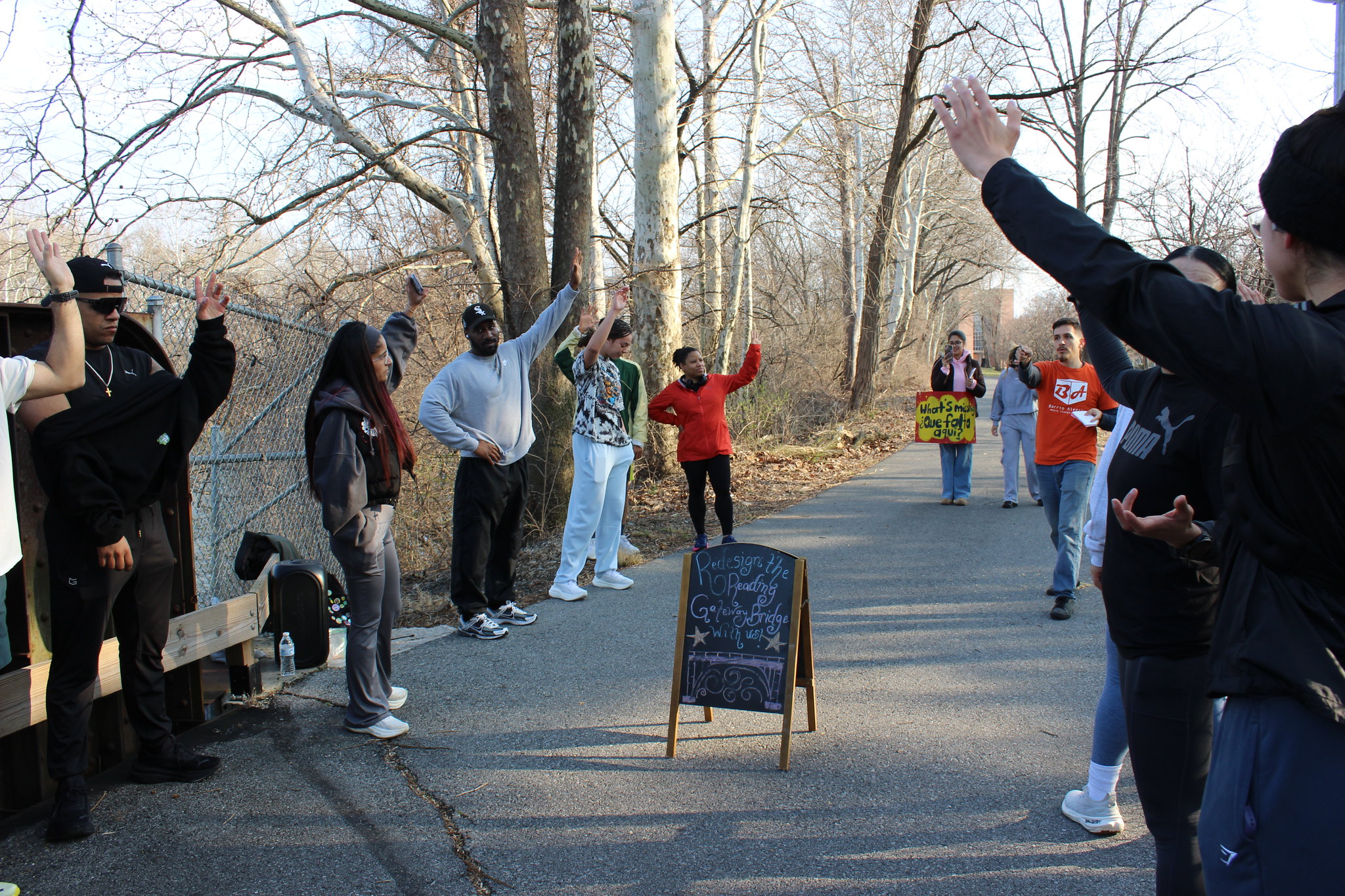
“Our partners at Barrio Alegría were instrumental in helping us reach out to both the trail community and the Reading residents to solicit ideas and visions for the bridge,” Schaefer said.
Through convening several in-person community meetings and analyzing hundreds of physical and digital surveys, Barrio Alegría collaborated with neighbors to create a guide for architects.
The designs were finetuned in a small workgroup committee of local cyclists, hikers, neighbors, volunteers, and officials.
“At its core, Barrio Alegría works to make the Reading that our most visionary neighbors want to live in,” said Anthony Orozco, director of operations for Barrio. “This was an exhilarating and quintessential project for us: to collect a menagerie of input from residents, and make real, actionable plans for them to come to fruition.”
SRG, Barrio, and Muhlenberg Green Architects recently presented the concept designs for the Reading Gateway Bridge to the Berks County commissioners, municipal leaders, and other stakeholders.
The bridge is part of the Schuylkill River Trail but the structure is owned by the county. Berks County planners have been involved in steering committee meetings during the concept design portion of the project. While several council members were invited to learn more about the project throughout the year, a formal presentation to the full council is slated for Dec. 14.
Just as the designs took months of community feedback and design, the process for securing federal, state, local and private funding for its construction will not be a sprint. SRG estimates that the fundraising process will take at least two years, which may be advantageous as other improvements happen in the meantime.
SRG and Barrio plan on sharing more developments about trail improvements in the near future, which expand outward from the Reading Gateway Bridge and into the city.
“We want the community to embrace the incredible assets of the trail, the river and the bridge and feel ownership and pride about them, so it was really important for the community to be a part of creating the vision,” Schaefer said
